How to Respond to "Your Price is Too High"
I recently had the opportunity to provide advice to a freelancer with a question that goes something like this:
There is a client that I really want to work with, but after sending a web design offer, their response was "Your price is too high, but I will check with my partner and get back to you." How should I respond?
This is an all-too-common response. The instinct is to panic and offer a discount, but that is almost always the wrong move. Here are six strategies for handling this conversation, with word-for-word scripts you can use.
Why You Should Never Lower Your Price
Before we get into responses, here is why discounting hurts you:
- It sets a permanent expectation. They will know you can work for less, and they will expect discounts for the rest of your relationship.
- It attracts the wrong referrals. They may recommend you because you were a good bargain, locking you into a cycle of being the "affordable" option.
- It signals low demand. Being willing to lower your price on the spot projects the sense that you are not in high demand, which actually lowers their confidence in hiring you.
So if you are not going to lower your price, what can you do? You have more options than you think.
1. Reduce the Scope to Meet Their Budget
The simplest approach is to keep your rate the same and adjust the deliverables. Ask what could be cut or simplified to bring the project within their budget.
For example, if you are a web designer, perhaps instead of building a custom design you could offer to provide tweaks to a stock template. This cuts down design and development time. Or maybe they could get by paying you to set up and customize a service like Squarespace for them.
Think of it this way: $5,000 for a custom site might be tight for your margins, but $5,000 for a few hours of Squarespace setup is a healthy rate, and the client is happy.
What to say:
"I completely understand working within a budget. Let's look at what we could adjust in the scope to bring this in line with what you're comfortable spending. I'd rather deliver something excellent at a smaller scale than stretch the project thin trying to do everything at once."
2. Reframe Your Price as an Investment
This is a harder conversation, but it can win you the original quote. The goal is to help the client see that going cheaper will cost them more in the long run.
I had a client once pass me by for a lower-priced agency. They were not happy with the result and had to pay me to come in and fix it, spending nearly double what my original quote would have been. They told me they wished they had just gone with me in the first place.
On another project, I landed the job as the largest bid of three agencies. When I asked why, they said: "While you were the most expensive, your proposal clearly understood our business and what would lead to a successful project. We didn't have that confidence in the other teams."
What to say:
"I hear you, and I appreciate you being upfront about budget. Let me share what I've seen happen when clients go with the lowest bid for this kind of work. In most cases, they end up paying more to fix what was delivered than if they had invested in doing it right the first time. I'd love to walk you through how this project will pay for itself by [specific business outcome]."
3. Ask What "Too High" Means to Them
Sometimes "your price is too high" is not a rejection. It is an opening to negotiate. The problem is that you do not know what their actual budget is, or whether "too high" means 10% over or 3x over. Ask.
What to say:
"Thanks for letting me know. Can I ask what you had in mind for the budget? That will help me figure out whether we can find a version of this project that works for both of us."
This does two things: it shows you are flexible without immediately cutting your price, and it gives you real information to work with. If their budget is $2,000 and your quote was $10,000, that is a fundamental mismatch and you should walk away. If it is $8,000 vs. your $10,000, there is room to adjust scope.
4. Offer Payment Terms
Sometimes the issue is not the total price. It is the cash flow. Freelancers know this better than anyone. Offering to break the payment into milestones can make the same number feel much more manageable.
What to say:
"Would it help to break this into phases? We could structure the project in two or three stages, with payments tied to each milestone. That way you're not paying everything upfront, and you get to see progress before the next payment is due."
This works especially well for larger projects. It also gives you natural checkpoints to keep the project on track.
5. Add Value Instead of Cutting Price
Instead of reducing your price or your scope, add something that costs you very little but feels valuable to the client. An extra round of revisions, a strategy call, a 30-day post-launch support window, training on how to use what you built.
What to say:
"I want to make sure you feel great about this investment. What if I include [specific bonus] at no extra charge? That would give you [specific benefit] and should make this feel like an even better deal for the price."
The key is to offer something that takes minimal extra time but addresses a concern they might have about ongoing support or getting the most from the deliverable.
6. Walk Away
Not every client is the right client. If they cannot afford your rate and you have reduced the scope as much as it makes sense to, the best response is to part ways professionally. This is harder than it sounds, especially when work is slow. But taking on underpriced projects fills your schedule with work that prevents you from finding clients who will pay your full rate.
What to say:
"I understand this might not be the right fit budget-wise right now, and I respect that. If things change or you have a future project where we might align better, I'd love to hear from you. In the meantime, I wish you the best with this one."
No hard feelings. No bridges burned. And you have kept your rate intact for the next conversation.
Email Templates
If this conversation is happening over email, here are two ready-to-send templates:
Template 1: Scope reduction offer
Subject: Re: Project Proposal
Hi [Name],
Thank you for your honest feedback on the proposal. I appreciate you sharing where you're at with the budget.
I'd like to keep working together on this. One option is to adjust the scope so we can deliver the highest-impact pieces within a budget that works for you. For example, we could [specific adjustment] and revisit the remaining items in a later phase.
Would you be open to a quick call this week to talk through what that could look like?
Best, [Your Name]
Template 2: Value reframe
Subject: Re: Project Proposal
Hi [Name],
I completely understand the budget concern, and I want to make sure this feels like the right investment for your team.
In my experience, [type of project] projects like this typically generate [specific ROI or outcome] within the first [timeframe]. I'd love to walk you through a few examples of how similar projects have paid for themselves and then some.
Are you free for 15 minutes this week? I think that conversation would give you a much clearer picture of the return you can expect.
Best, [Your Name]
How to Set Up Pricing That Avoids This Conversation
The best way to handle "your price is too high" is to hear it less often. A few strategies that help:
- Use price bracketing to give clients three options (Good, Better, Best). This anchors the conversation around the middle tier rather than a single number they can only say yes or no to.
- Consider a hybrid pricing approach that blends hourly and project-based billing. This gives clients more transparency into what they are paying for.
- Understand value-based pricing so you can frame your proposals around outcomes rather than hours. When the client sees the price tied to a business result, "too high" becomes harder to argue.
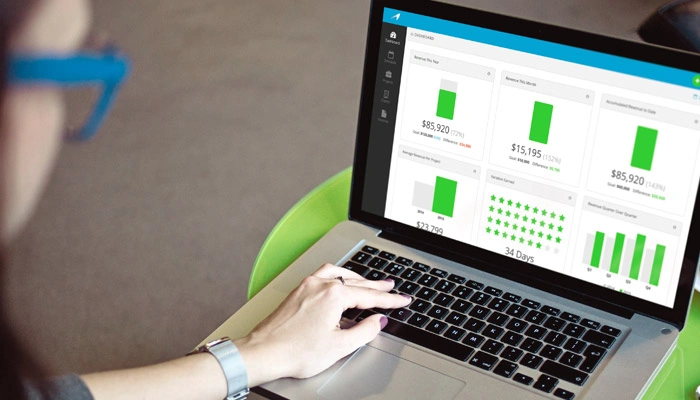
- Set a yearly revenue goal with a tool like Harpoon's goal calculator so you know exactly what rate you need to charge. When you know your number, you negotiate from confidence rather than anxiety.
What to Do Next
Personally, I recommend starting with the reframe conversation. Lead with value. If that does not land, offer to adjust scope. And if the gap is just too wide, walk away knowing you did not undersell yourself.
The freelancers who consistently earn more are not the ones who win every deal. They are the ones who protect their rates and attract clients who value quality over cost.